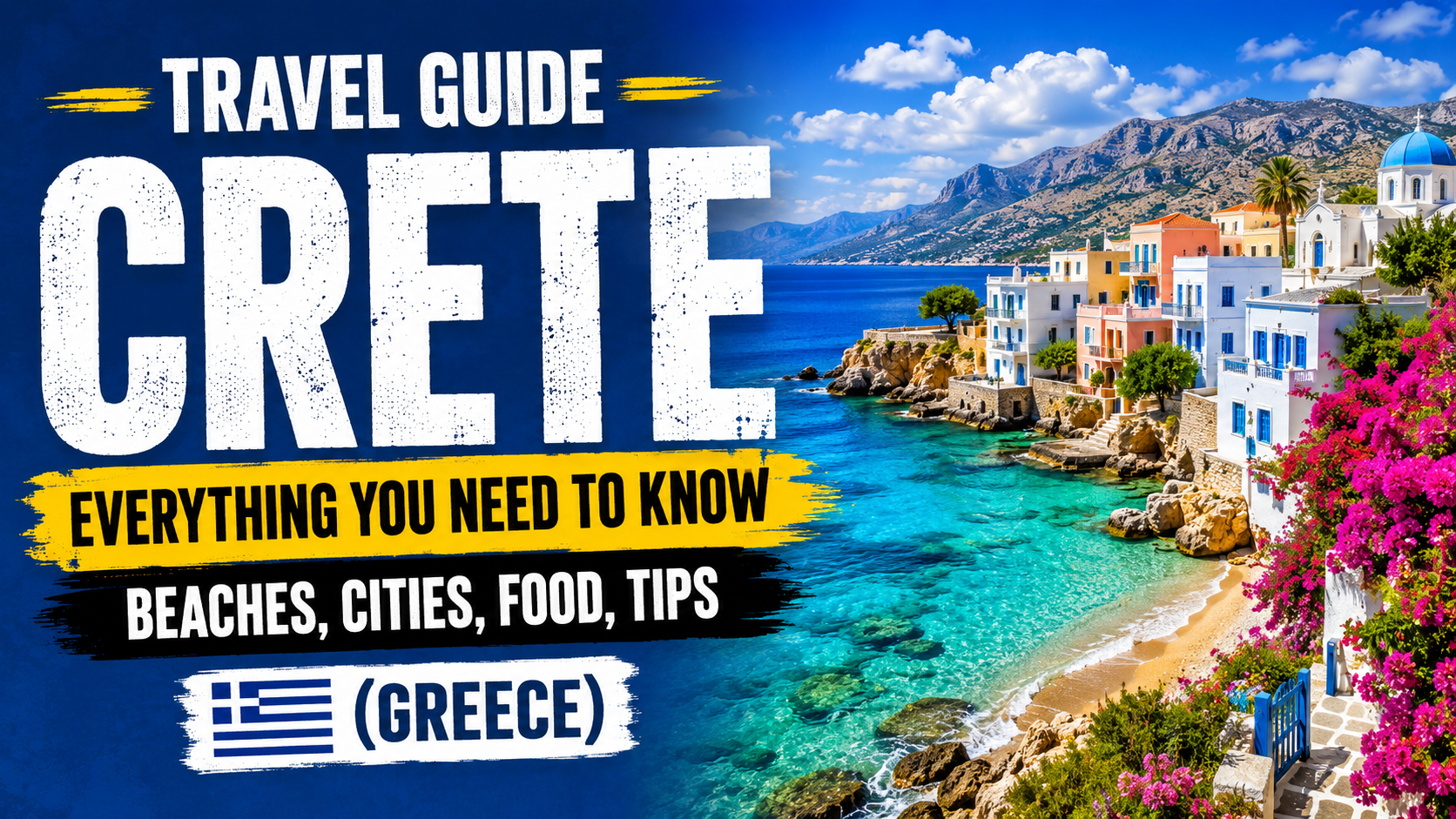
Crete (Greece) Travel Guide
Reading Time: 7 minsCrete, the largest Greek island, is one of those destinations where you can easily combine a beach holiday with road trips, mountain scenery, historic towns, traditional villages, hiking, and some of the most impressive archaeological sites in Greece.
We stayed near Kolymbari at Euphoria Resort and used the area as a base for exploring western Crete, but the island is much larger than it first appears. If you want to see more than one region, it really helps to plan your route in advance.
Here’s a practical guide with everything worth knowing before your trip — from flights and accommodation to car rental, mobile internet, beaches, food, and some of the best places to visit.
Table of Contents:
Flights to Crete
Crete is served by several airports, but most international visitors arrive through Heraklion or Chania:
- Heraklion International Airport (HER) – the busiest airport on the island and the most convenient for Heraklion, Hersonissos, Malia, Knossos, and much of central and eastern Crete.
- Chania International Airport (CHQ) – the best choice for Chania, Kolymbari, Falassarna, Balos, and western Crete.
- Sitia Airport (JSH) – a much smaller airport serving the eastern part of the island, mainly with domestic and limited seasonal connections.
If your plans are flexible, compare both Heraklion and Chania because flight prices and schedules can differ quite a lot. You can search for flights on Trip.com or Aviasales.
If your flight is heavily delayed or cancelled, you can also check whether you may be entitled to compensation through AirHelp or Compensair.
Getting from the Airport
If you’re staying in Chania, Heraklion, or one of the larger resorts, buses and taxis are available. For smaller villages and resorts farther from the main towns, a transfer or rental car is usually much more convenient.
You can pre-book an airport transfer through Kiwitaxi, Welcome Pickups, or GetTransfer.
If you’re planning to explore the island, however, I would seriously consider picking up a rental car at the airport instead.
Where to Stay in Crete
Crete is large enough that choosing the right base makes a big difference. Driving from one end of the island to the other takes several hours, so it’s better to stay relatively close to the places you most want to see.
- Chania – one of the best bases for a first trip, especially if you want to explore Balos, Falassarna, Elafonissi, and western Crete.
- Kolymbari – quieter than Chania and a good option if you prefer a resort atmosphere while still being well positioned for road trips.
- Rethymno – a good compromise between western and central Crete, with a beautiful old town and long beach.
- Heraklion – convenient for Knossos, museums, ferries, and exploring central Crete.
- Hersonissos and Malia – lively resort areas with plenty of hotels, restaurants, and nightlife.
- Agios Nikolaos and Elounda – excellent choices for eastern Crete, quieter scenery, and trips to Spinalonga.
We stayed at Euphoria Resort near Kolymbari, which worked particularly well for exploring the western side of the island while still having the facilities of a full resort.
You can compare hotels and apartments on Booking.com, Trip.com, or Agoda. For private houses and larger holiday villas, Vrbo is also worth checking.
Getting Around Crete
Renting a car is one of the best ways to explore Crete. There are buses between the larger towns and popular destinations, but many beaches, mountain villages, viewpoints, and smaller archaeological sites are much easier to reach independently.
Compare rental prices on DiscoverCars, Localrent, or AutoEurope.
The main coastal roads are generally easy to drive, but mountain roads can be narrow, winding, and much slower than the distance on Google Maps suggests. Allow extra time when driving inland.
Driving & Parking
Driving in Crete is fairly straightforward once you’re outside the busiest towns, but there are a few things worth keeping in mind.
- Mountain roads can be narrow and have sharp bends, especially when travelling to small villages and remote beaches.
- Parking near old towns and popular beaches can fill up quickly during summer.
- Distances are deceptive – 50 km through the mountains can take much longer than 50 km on the main highway.
- Fuel is easy to find around towns and main roads, but it’s a good idea to fill up before longer trips into remote areas.
For popular places such as Elafonissi, Balos, and Chania Old Town, arriving early makes parking much easier.
Best Time to Visit Crete
Crete has a long travel season, and the ideal month depends on whether you mainly want beaches or a more active trip.
- April–May – excellent for sightseeing, hiking, road trips, and greener landscapes.
- June–September – the main beach season with the hottest weather and warmest sea.
- September–October – one of the best periods for combining swimming with sightseeing and fewer crowds.
- Winter – much quieter, with fewer tourist services open in resort areas, but still interesting for cities and local life.
If you want beaches without the strongest summer heat, late May, June, September, and early October are particularly attractive.
SIM Cards & Internet
Mobile coverage is generally good around the towns, resorts, and main roads. Coverage can become weaker in mountainous and remote areas, so offline maps are useful for longer road trips.
An eSIM is the easiest option if you want internet ready as soon as you arrive. You can compare plans from Airalo, Yesim, or Drimsim.
If you prefer a physical SIM, prepaid options from Greek mobile operators are available in the larger towns.
Travel Insurance
Before buying separate travel insurance, check whether you already have coverage through your bank card, home insurance, employer, or another existing policy.
If you still need additional coverage, you can check options through VisitorsCoverage or EKTA.
Insurance is particularly worth considering if your plans include hiking, rental cars, boat trips, or visits to remote beaches.
What to Eat in Crete
Cretan food was one of the highlights of the trip for me. Even simple tavernas often serve very good local products, and village restaurants can be worth stopping at during a road trip.
- Dakos – barley rusk topped with tomato, local cheese, olive oil, and herbs.
- Kalitsounia – small Cretan pastries, often filled with cheese or greens.
- Graviera – one of the island’s best-known cheeses.
- Fresh seafood – particularly nice in smaller coastal villages.
- Cretan olive oil – available almost everywhere and also a good souvenir.
- Honey and local herbs – easy to find in village shops and markets.
Shopping & Essentials
For everyday groceries, larger towns have plenty of supermarkets, while smaller villages often have local mini-markets and bakeries.
SYNKA is common in western Crete, and you’ll also find larger national chains in the main towns. For something more local, village shops are a good place to buy olive oil, cheese, honey, herbs, wine, and other Cretan products.
Must-Visit Places
Crete has far too much to see in a single short trip, but these are some of the places that stand out the most.
Elafonissi Beach
Elafonissi is famous for its shallow turquoise water, pale sand, and pinkish tones that appear in parts of the beach. It’s one of the most photographed places on Crete and also one of the busiest.
Tip: arrive early in the morning or later in the afternoon if you want a quieter experience.
Balos Lagoon
Balos is one of the island’s most dramatic landscapes, with turquoise water, white sand, and views that look almost unreal from above.
You can reach the area either by boat from Kissamos or by driving along a rough road and then walking down to the lagoon. Boat trips and organised excursions can be compared on GetYourGuide or Viator.
Samaria Gorge
Samaria Gorge is one of Crete’s best-known hiking experiences, with dramatic cliffs, mountain scenery, and a long route through the national park.
The full hike is demanding and takes most of the day, so good footwear, plenty of water, and an early start are important. If you don’t want to arrange all the transport yourself, organised hiking trips are available through GetYourGuide and Viator.
Chania Old Town
Chania is one of the most beautiful towns on Crete, with its Venetian harbour, narrow streets, colourful buildings, restaurants, and waterfront cafés.
Try to stay until evening — the harbour is especially atmospheric around sunset, and it’s a great place for dinner after a day of exploring western Crete.
Heraklion & Knossos Palace
Heraklion is the island’s largest city and an important base for anyone interested in Minoan history. Just outside the city lies the Palace of Knossos, Crete’s most famous archaeological site and the place most closely associated with the legends of King Minos and the Minotaur.
If you want to avoid queues or combine Knossos with a guided tour, check available tickets and experiences on GetYourGuide, Viator, or Tiqets.
Rethymno Old Town
Rethymno combines Venetian architecture, narrow old-town streets, cafés, restaurants, and a long sandy beach. It’s a good stop if you’re travelling between Chania and Heraklion and also works well as a base for several days.
Preveli Beach
Preveli is one of Crete’s most unusual beaches, where a river runs through a palm-lined valley before reaching the sea.
The classic viewpoint involves walking down a steep path, so remember that you’ll also need to climb back up afterwards. Another option is to arrive by boat.
Matala
Matala is known for its beach, relaxed atmosphere, and caves carved into the cliffs beside the sea. The village later became famous for the travellers and hippies who stayed in the caves during the 1960s and 1970s.
It’s a very different atmosphere from the large resorts and makes a good stop while exploring southern Crete.
Spinalonga Island
Spinalonga is a small fortified island near Elounda with a fascinating history. It is particularly known for the former leprosy settlement that operated there during the 20th century.
Boats leave from Elounda and Plaka, and you can also compare organised trips through GetYourGuide or Viator.
Seitan Limania Beach
Seitan Limania is a tiny cove surrounded by dramatic cliffs near Chania. The vivid blue water looks incredible from above, but access requires a steep walk down uneven terrain.
Wear proper shoes rather than flip-flops and avoid carrying more than you need for the beach.
Tours, Boat Trips & Activities
Crete is ideal for independent road trips, but some experiences are much easier with organised transport — especially Samaria Gorge, Balos boat trips, Spinalonga, sailing excursions, diving, and guided visits to archaeological sites.
You can compare tours and activities on GetYourGuide or Viator. For attraction tickets and archaeological sites, Tiqets is also worth checking.
Bonus Tips
- Don’t underestimate the size of Crete: trying to visit Chania, Heraklion, eastern Crete, and the southern coast from one hotel can mean spending a lot of time in the car.
- Start early: famous beaches such as Elafonissi and Balos are much more enjoyable before the main crowds arrive.
- Bring proper shoes: even some beaches require steep or rocky walks.
- Keep water in the car: especially during summer road trips and hikes.
- Download offline maps: useful in mountain areas where mobile coverage may become weaker.
- Try small village tavernas: some of our best food experiences came away from the main tourist areas.
💬 Small note: Some links on this page are affiliate links. If you book or buy something through them, I may receive a small commission from the service at no extra cost to you. It helps me create more travel guides and videos. Thank you! 🙌